PURA VIDA!
Do these words sound familiar to you? Translated from Spanish as “pure life,” this phrase has become internationally recognized as the tag line for Costa Rica, one of the happiest countries on Earth, as touted by countless independent research bodies like National Geographic and the United Nations World Happiness Report.
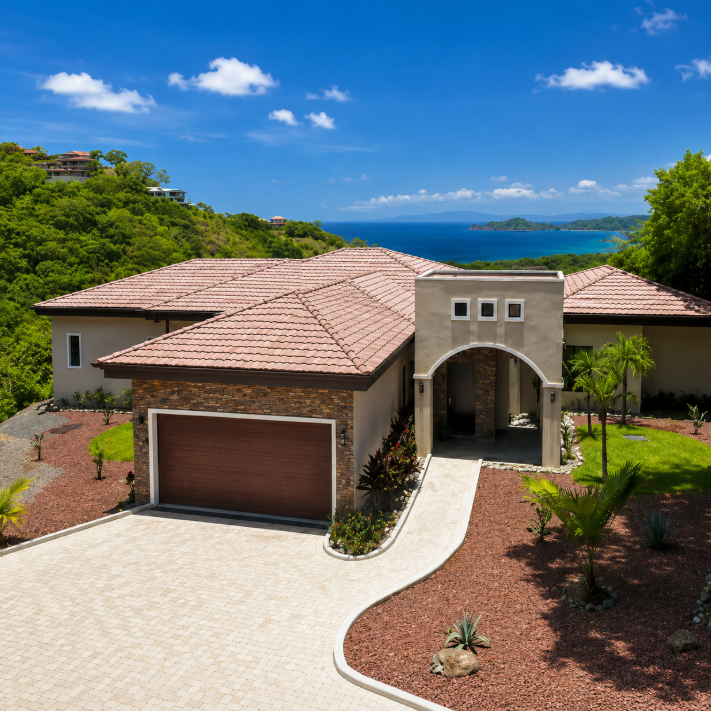
Costa Rica is home to some of the world’s most beautiful beaches, tropical rainforests, vibrant culture and happy people. When you layer on a growing economy supported by a democratic government highly invested in public healthcare and education, it is no wonder Costa Rica has attracted international investment across industries.
For me, real estate is by far at the top of the scale, and for more than a decade now I have experienced tremendous success as a Canadian investing in real estate in Costa Rica.
It all started in January 2010 when I took a holiday there and came home with much more than a tan. I saw an opportunity in real estate and seized it. I purchased a brand-new luxury condo unit in a beautiful resort-style gated development in Playas del Coco (Coco Beach) just 20 minutes from the Liberia International Airport.
It came with all the bells and whistles, including a private beach club, 6 pools, hot tub, gym, tennis courts, retail plaza, hiking trails and more. With 2 bedrooms, 2 bathrooms and more than 1,400 sq. ft., there was plenty of room for anyone to enjoy a holiday. This became my investment concept – vacation home for free!
The math was easy. It cost $175,000 USD to purchase, and there was already established precedent to rent it to vacationers on a short-term basis for $1,000 per week. I could enjoy personal holidays several times throughout the year while still generating enough rental income to support all of the property expenses and more.
My plan was quite simple: set this up as a real estate investment that both pays for itself and pays me to enjoy it. I am happy to report that even after investing in more than a dozen other Costa Rican properties that have come in and out of my portfolio, I still own this very first one today and it has delivered on all expectations.
As with any investment, you need to start with a plan. Mine included the creative use of a leverage strategy to own a desirable vacation property that I could otherwise not “afford.” Regardless of what your plan is, you will need to establish some local resources in order to execute successfully.
Your dream team includes three key stakeholders: a property manager, lawyer and real estate agent.
I find it extremely helpful to know what it will look like to own and operate a foreign investment, even before you buy it. This will provide both comfort and confidence to know you are making the right decision and manage your expectations accordingly.
Starting with your property manager, this becomes your feet on the ground when you are a plane ride away. They can handle everything from furnishing your property to booking rentals, check-ins, cleaning, maintenance, even renovations. They will manage the accounting too, like paying your local bills and collecting rent payments.
The cost of a property manager can vary based on many factors, but quite typical is the arrangement I have on my own properties. I pay $100 per month that covers the administration services plus a 20% commission on short-term rentals.
Just like in Canada, you will need a lawyer for real estate closings. Your property manager will likely have a recommendation for you, but there are plenty of options to choose from, as a growing real estate industry in Costa Rica includes a growing number of real estate lawyers ready for hire.
And in case you were wondering, there are no restrictions nor any additional taxes on Canadians buying real estate in Costa Rica. You are welcome to invest personally, or through a corporation, and all of the documents will reference your Canadian passport number. It’s that simple.
You can ask your Canadian lawyer or accountant to advise on how best to proceed. In the event you see the benefit of having a corporation, your Costa Rican lawyer can set it up in a few days, often for less than $1,000.
On the topic of selling, I often get asked about taxes in Costa Rica and investors love the answer. Their capital gains tax is a fraction of our Canadian equivalent, at just 15%.
Remember, by definition, this is only an expense in the event you sell an investment for a profit. The good news is that you can include reasonable expenses as a write-off against the gains, so be sure to keep all of your receipts, even your flights down south to go “check” on your property and make sure that everything is alright.
Next you will need a local real estate agent, and your property manager is a great place to ask for that referral. Considering that Costa Rica does not have an official MLS system for property searches like we do in North America, your agent will be the best gateway to sourcing properties of interest, many of which you may never have found on your own.
They will also be able to walk you through the entire process I described above, as they understand how important each of these steps is to foreign investors that are just learning how to navigate the landscape, including the final negotiations on purchasing your property.
With the right team in place, you will be primed to jump into action on your very own investment, but that does leave one final step of how to finance your acquisition.
Although possible, it is not easy for foreigners to obtain a mortgage with a Costa Rican bank, nor do I advise this route given how much higher their cost of borrowing is. Shy of being a cash investor, my suggestion is to use Canadian bank leverage to your fullest potential.
For Canadian homeowners, a home equity line of credit (HELOC) tends to be your cheapest source of borrowed funds and the place I turn to first for my own investments.
Now circling back to the concept of owning a vacation home for free, you can see exactly how I made this happen, and now so can you.
It does not take many weeks of rental income from your property to cover the financing costs of your acquisition or your ongoing property expenses. Factor in a few of your own holidays each year, cost of flights included, and you can still see a positive cash flow that can be allocated toward paying down the balance of your acquisition loan.
Before long, not only will you own a vacation home for free, but you will be getting paid to enjoy it!