

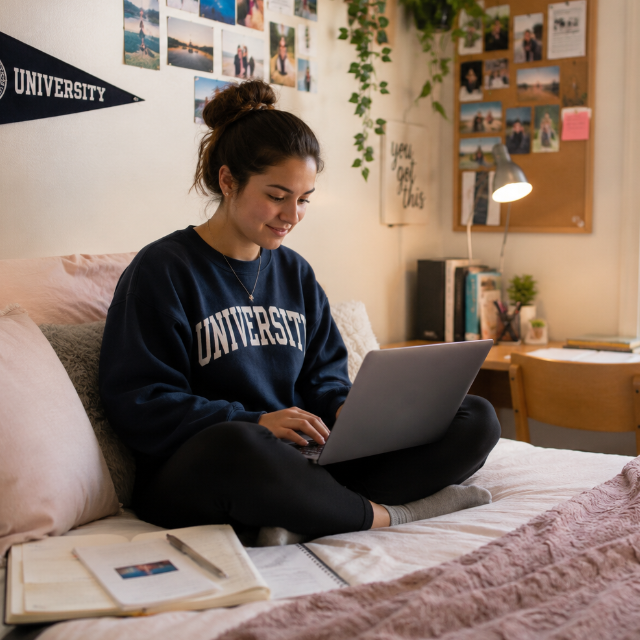
Student rentals are an attractive strategy for investors due to a higher income potential, relative to standard rentals.
As an investor who has managed my own properties for twelve years, I have fine-tuned three areas of the student rental management system that every investor needs to know:
1. Lease Structure & Guarantors:
Students usually rent in groups of two to three people. As a result, it is easier to rent three bedrooms to a group of students, and comparably harder to rent four-bedroom apartments or larger units to a single group.
Three bedrooms are usually leased to one student and their guarantor. For four-bedrooms or more, I lease to one student in a group of three, then rent the other rooms to one other leaseholder for themselves or their group.
Aiming for fewer student lease holders:
Students usually move out one at a time and re-rent their old roommate’s room. If the original leaseholders move out except one, then this student tenant could stay for years while re-renting the other rooms out at higher rates. This means you have little control over whom they bring into your property and you might be losing out on higher market rents that the leaseholder is profiting from.
If a situation arises where a roommate decides not to pay rent or causes damage, the leaseholder can contact the police to remove them for trespassing.
Always ask for a Canadian citizen to act as a guarantor for students. Be sure you get copies of pages 2 and 3 of the guarantor’s passport to confirm their citizenship and address. If your guarantor is not Canadian and lives in another country, then you will have a very difficult time trying to pursue them in court if needed.
2. Professional Advertising:
Your ad reflects your standards as a landlord. It shows tenants what you deem acceptable. If the apartment is unclean, if you use dark and blurry photos (especially with your finger caught in the shot), or if the description is too short or carelessly written, your chances of attracting a problem tenant increase.
We prefer to use Facebook marketplace (FBMP) for rental ads. In our experience, the following make the biggest difference in attracting quality students:
- Pre-move-in photos of the apartment completely vacant, cleaned, and newly painted is your second-best option if you can’t have the unit tastefully furnished or staged.
- Never use current photos of occupied apartments, or photos of unfinished renovations, tools, materials, etc. Tenants do not share your vision. They will only see chaotic clutter.
For the description:
- Highlight strengths like “lots of cabinet space” and use adjectives like “beautiful and bright”.
- Don’t use long paragraphs. Instead, list key features next to green bullet points.
- Use green checkmark or x-mark boxes to explain what’s included or excluded in the rent.
If applicable, add information such as:
- “Non-smoking, clean building with quiet neighbours”
- “Prime location close to amenities, restaurants, lake, parks, schools and more!”
- “A few minutes walk to bus stop at (insert location)” and name the buses and routes to nearby colleges.
3. Tenant Selection:
At the end of the ad, include this instruction:
“Please do not reply to this ad. To request a showing, please email Alex at username @ email . com (insert spaces in the email address because Facebook won’t show it otherwise). In your email, let us know a bit about yourself, who will be living in the unit (including pets) and your desired move-in date.”
We’ve found that high quality tenants follow instructions. I do not necessarily exclude Facebook replies, but someone who follows instructions is usually an agreeable and cooperative tenant.
When you get a Facebook reply:
Always click “view profile”. It’s surprising what people post, including, but not limited to: pictures showing house parties, the messy condition of their current living situation, or they may post political views or rants such as, “Landlords are greedy,” which might indicate a class prejudice against landlords.
When reviewing an application:
Look up the current address on Google Maps or better yet, drive by it. If they live in an area with a bad reputation and in a property that looks like a party house, then expect them to bring these standards to your building, rather than rising to meet your standards.
Lastly, call landlord and work references
Ask questions to get a sense of what a working relationship with these students is like. Do they keep the place/workspace clean or are they “typical students”? Do they get along with other residents/coworkers?
Don’t be a typical landlord with typical students.
Be the best landlord and find the best people to care for your property.